
Factory
Cut and Sew Manufacturing: The Process, the Costs, and How to Choose a Manufacturer
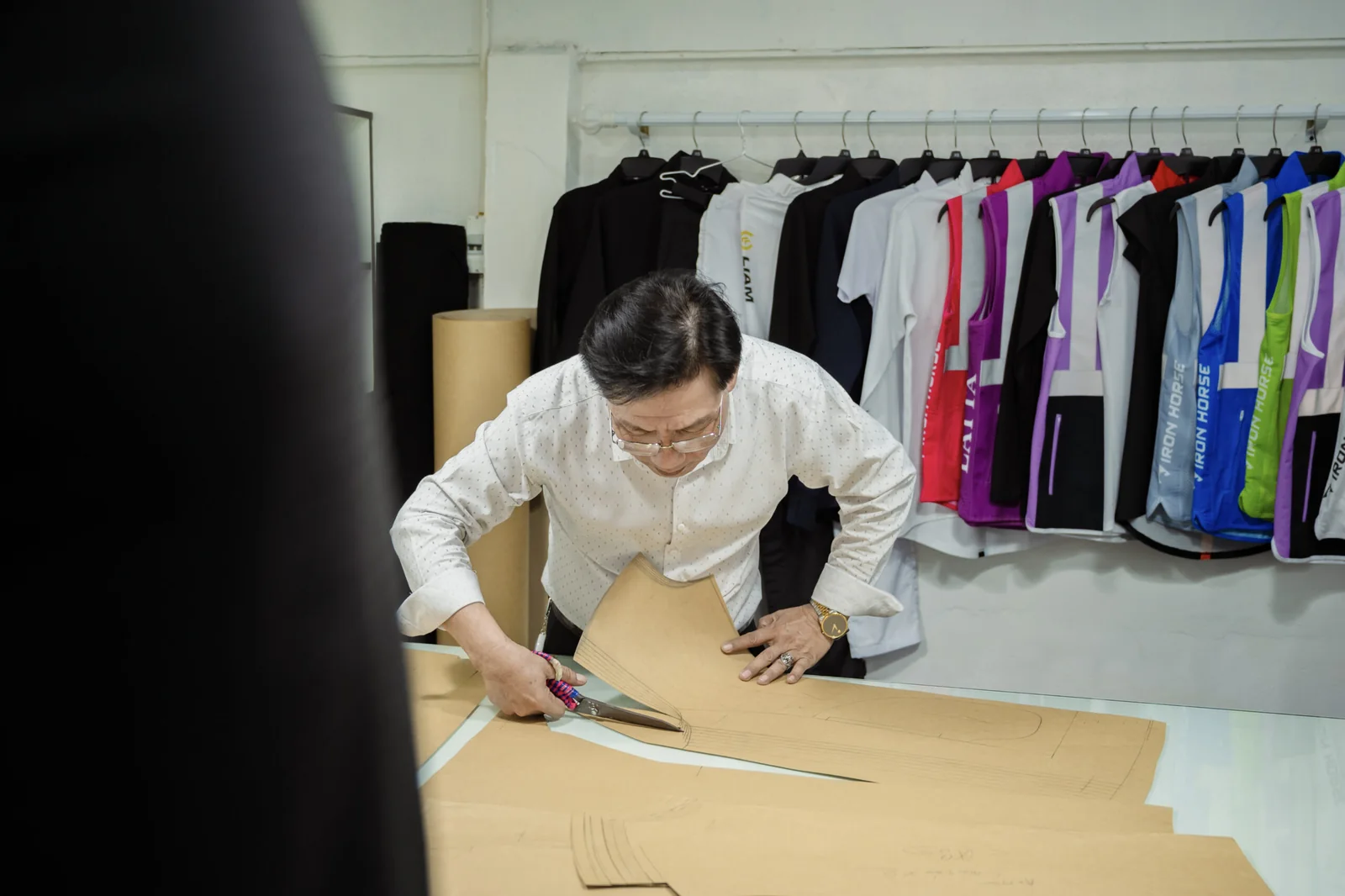
Cut and sew manufacturing means your garment is made from raw fabric: patterns are drafted to your measurements, the fabric is cut into panels, and the panels are sewn into a finished piece. It is the opposite of printing on a ready-made blank. You get full control over fit, fabric and construction, and you pay more upfront because pattern, grading and sampling work is done for your style alone. Minimums vary widely between factories. At Iron Horse there is none, so a cut and sew style can start from 1 piece per colour.
What cut and sew manufacturing means
A cut and sew manufacturer makes garments from scratch. Instead of buying a finished t-shirt and printing on it, the factory takes rolls of fabric, cuts them into the pattern pieces of your design and sews those pieces together. Every choice, from the fabric and the fit to the stitch on the hem, is yours.
That is the real difference between a clothing brand and a merchandise line. Printing on blanks is quick and cheap, but the fit, fabric and construction belong to the blank maker, and any competitor can buy the same one. Cut and sew is how you get a garment nobody else has.
Cut and sew versus decorated blanks
| Decorated blank | Cut and sew | |
|---|---|---|
| Fit and shape | Set by the blank supplier | Drafted to your measurements |
| Fabric | Whatever the blank is made from | Your choice of fibre, weight and finish |
| Details | Limited to print or embroidery | Pockets, seams, panels, trims and labels |
| Upfront work | Minimal | Pattern, grading and sampling |
| Exclusivity | Anyone can buy the same blank | Unique to your brand |
The cut and sew process, stage by stage
Whatever the garment, the work runs in the same order. Knowing the stages makes it much easier to read a quote and plan a launch date.
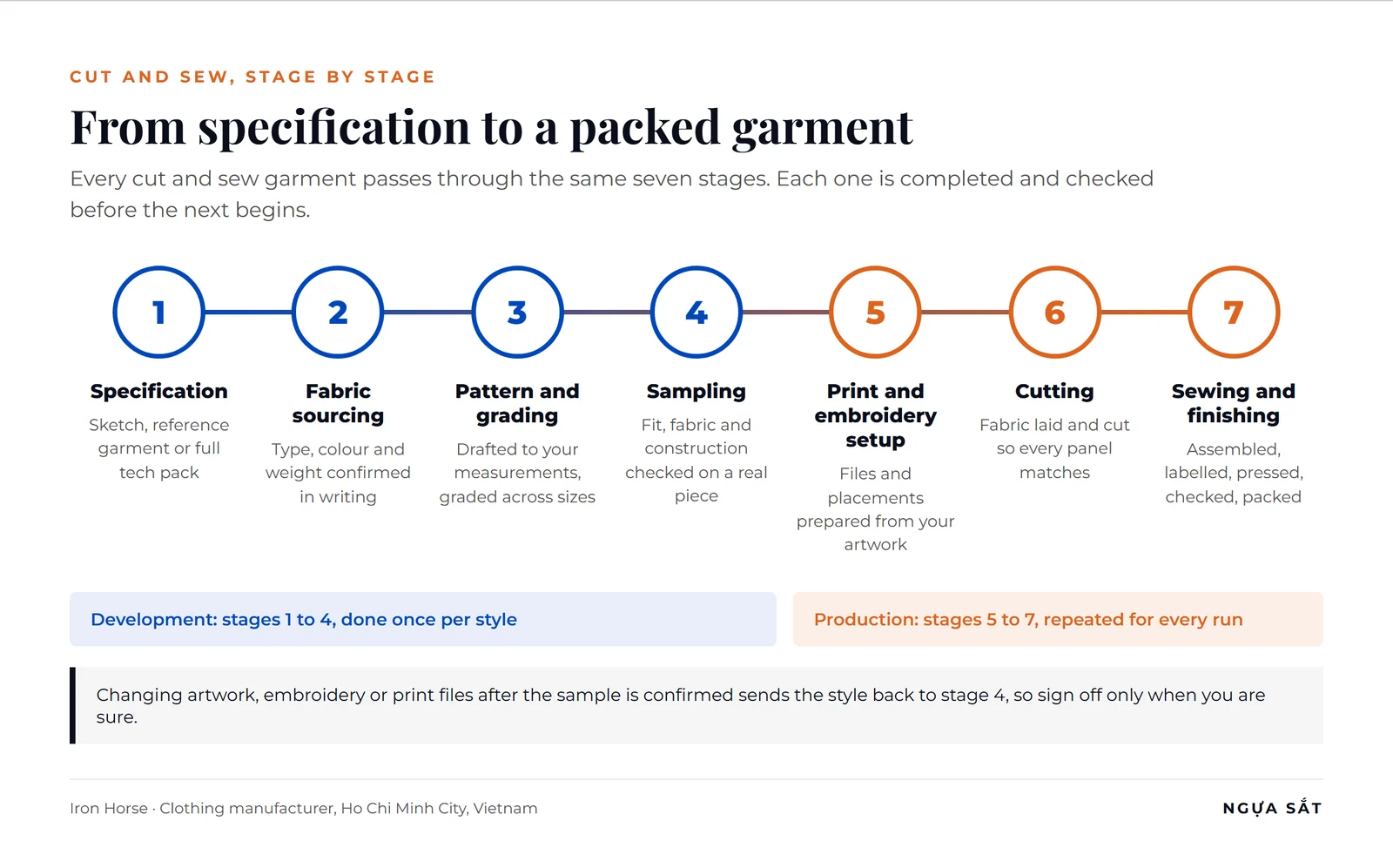
1. Specification
Everything starts with a clear spec: at least a sketch or reference garment, ideally a full tech pack with measurements, fabric, stitching, trims and label placement. Our guide what is a tech pack explains what goes in one, and our tech pack service can build it from your sketch or sample.
2. Fabric sourcing
Materials are sourced to the specification, with fabric type, colour and weight confirmed in writing before anything is cut. Zips, buttons, drawcords, elastic and other trims are sourced at the same time.
3. Pattern making and grading
A pattern maker drafts the pattern pieces for your base size, then grades them up and down across your size range so the fit stays consistent from the smallest size to the largest.
4. Sampling
A sample is cut and sewn to check fit, fabric and construction on a real garment. Expect at least one round of changes. That is what the sample is for.
5. Print and embroidery setup
Screens, embroidery files and placements are prepared from your artwork at the exact size and position specified. Some decoration goes onto flat panels before sewing, all-over sublimation on sportswear being the obvious example, which is why placements have to be fixed before cutting.
6. Cutting
Fabric is laid out and cut to the approved pattern, so every panel matches across the whole run.
7. Sewing and finishing
Panels are assembled, labels and tags are attached, and the garments are pressed, checked and packed for despatch.
At Iron Horse, bulk production runs on our own sewing floor in Ho Chi Minh City, and each stage is completed and checked before the next one begins. The full sequence is set out on our working process page.
What drives cut and sew costs
Cut and sew is priced from the garment up, so the cost reflects the decisions in your spec.
- Fabric and fabric usage. The price of the fabric and how much each garment consumes. Wide panels, oversized fits and directional prints use more.
- Number of pieces and operations. A crew neck tee is a handful of panels and seams. A jacket with a hood, zip, pockets and lining runs to many more operations, each adding sewing time.
- Size range and colourways. Every size needs a graded pattern, and every colour needs its own fabric and thread.
- Trims and hardware. Custom zip pulls, branded buttons, drawcord tips and elastic add cost and sometimes lead time.
- Decoration. Prints, embroidery and sublimation each carry setup work on top of the per-piece cost.
- Quantity. Pattern, grading and setup costs are shared across the run, so the price per piece falls as quantity rises.
Two costs catch first-time brands out. The first is sampling, which is charged separately. At Iron Horse the sample fee is refunded once you place a bulk order, and we pay the courier cost of sending the sample to you. The second is change. Altering artwork, embroidery or print files after the sample details are confirmed resets the timeline and can add cost, so it pays to be sure before you sign off.
Knit or woven: why it changes the job
The single biggest technical fork in cut and sew is whether your fabric is a knit or a woven, and it is worth knowing which one you are asking for.
- Knits, such as jersey, fleece, piqué and most performance fabrics, stretch. Patterns are drafted with that stretch in mind, and seams are usually sewn on overlock and coverstitch machines so they can move with the fabric. T-shirts, hoodies, polos and leggings are knit garments.
- Wovens, such as shirting, twill and denim, do not stretch unless elastane is added. They need more ease built into the pattern, and they tend to involve more operations: collars, plackets, cuffs, buttonholes and pressed seams. Button-down shirts and caps are typical woven products.
Neither is better, but they are priced and timed differently, and a factory that is excellent at one is not automatically excellent at the other. Sending a reference garment in the fabric you want removes most of the guesswork.
How long cut and sew takes
Sample lead time at Iron Horse is 7 to 30 days from the date every detail is confirmed, depending on the complexity of the design and whether the materials are readily available. Bulk timing depends on order size and the production schedule, and we confirm it with your quote. After that, air freight typically takes around 5 to 7 days and sea freight 20 to 45 days. For a first collection, build in time for at least one sample revision before you commit to a launch date.
How to choose a cut and sew manufacturer
Good cut and sew factories differ most in pattern skill, fabric access and communication. These questions tell you a lot, quickly:
- Do you make and grade patterns in-house?
- Which fabrics do you work with regularly? Ask about the type you need, whether that is cotton fleece, piqué, woven shirting or technical performance knits.
- Can I see garments you have made in a similar category? Look at the seams, hems and label placement, not just the photos.
- What is the minimum per style and per colour?
- What do you need from me before a sample can start?
- What happens if the bulk order does not match the approved sample?
For a wider look at vetting factories, including where to look and how to compare quotes, see our guide on how to find a clothing manufacturer.
Red flags
- A firm quote before they have seen a spec, sketch or sample. It is a guess, and it will change.
- No sample stage, or pressure to go straight to bulk.
- Unclear answers about who drafts and grades the pattern.
- Fabric described only as “cotton” or “polyester”, with no weight or composition.
- A minimum that quietly applies across every colour combined, or only to their stock styles.
Cut and sew at Iron Horse
Iron Horse is a cut and sew manufacturer in Ho Chi Minh City, Vietnam, producing garments for brands in the US and internationally. We make everything from the t-shirt and piqué polo to 2-in-1 running shorts and button-down shirts, including sublimation printing for sportswear. There is no minimum order: start with 1 piece per style per colour and scale when you are ready.
Have a design ready to develop? Request a quote or send us your sketch or sample, and we will confirm the sample cost and an estimated bulk price.
 English
  Vietnamese